TL;DR
A 15x19x1 gives you 285 square inches of face area, about 43% less than a common 20x25x1, so it restricts airflow sooner. With one shedding pet, change it every 45 to 60 days rather than the standard 90. With multiple pets or an allergy sufferer, make it 30.
Key Takeaways
• 285 square inches of face area, 43% less than a 20x25x1 (500 sq in) and 29% less than a 16x25x1 (400 sq in).
• Pet hair is a surface loader, matting on the upstream face and raising resistance faster per gram than fine dust does.
• ENERGY STAR advises checking monthly and changing at minimum every three months. Treat that as a floor, not a target. It was not written for pet homes or small filters.
• An indoor cat raises household cat-allergen dust roughly 100-fold, a dog roughly 50-fold, per a survey of 831 US homes funded by NIEHS.
• You pay a premium for the odd size, about 2.3 times more per filter than a 20x25x1 at the same tier.
Why Does a 15x19x1 Fill up Faster than a Bigger Filter?
Dust-holding capacity scales with media area, so this panel hits a given pressure drop after taking on roughly 40% less debris than a 20x25x1 would. The 90-day number on most packaging assumes an average dust load in a standard-size filter, and a 15x19x1 is neither.
Where it sits compounds that. If your 15x19x1 is the only return, every cubic foot the blower moves passes through those 285 inches, so face velocity runs higher and the filter loads faster. If it is one of several, it is usually the return in a hallway, bedroom, or air handler closet, exactly where pets sleep and shed. Local load fills it, not the household average.
Runtime is the third variable, and most schedules ignore it. Residential systems typically run under 25% of the time in heating and cooling seasons, so a blower left on continuously loads a filter much faster.
Why Is Pet Hair Harder on a Filter than Ordinary Dust?
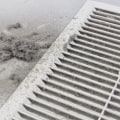
Fine dust works its way into the depth of the media and distributes through it. Pet hair never gets that far. Fur catches on the upstream pleat faces and builds a mat there, and that mat behaves like a second, unrated filter in front of the real one. Resistance climbs while the media behind it is still clean.
Which is why a pet-home filter can look alarmingly furry at 30 days and still feel almost clean. A calendar beats no check, but it loses to looking.
Dander is the health half of the story. In the National Survey of Lead and Allergens in Housing, which NIEHS and HUD ran across 831 homes, those with an indoor cat averaged roughly 200 µg of cat allergen per gram of settled dust against 1.5 µg/g without. Dog allergen ran 69 µg/g against 1.3. Both turned up in nearly every home sampled, including homes that never had a pet, since these allergens travel on clothing.
What Is the Realistic 15x19x1 Change Interval With Pets?
Start here, then adjust:
• One short-haired pet, moderate runtime: 60 days
• One heavy shedder, or two pets: 45 days
• Three or more pets, or asthma or allergies in the house: 30 days
• The 15x19x1 is your only return: shorten each of the above by two weeks
Shorten further during peak season, through spring and fall coat blow, if you run the fan continuously, or after an event such as wildfire smoke. Manufacturers advise every 60 to 90 days, and the EPA adds that a filter coming out heavily soiled should have come out sooner.
How Do You Tell It Is Time Without Checking a Calendar?
Pull the filter and hold it up to a light. If light does not pass through, it is past due. The test takes fifteen seconds and beats every interval on this page, because it measures your house, not an average one. It reads clearest on MERV 8 and 11; MERV 13 media is dense enough when new that you should lean on the airflow checks below.
Two checks support it. Hold a tissue near the return grille while the system runs, since weak pull suggests restriction. And watch your surfaces: dust returning days after cleaning means the filter has stopped catching what it should. Set a 30-day reminder to look, not replace.
What Does a 15x19x1 Cost a Pet Owner per Year?
Between $118 and $235, depending on interval. Priced on Filterbuy's pages in August 2026 at the six-pack tier, a 15x19x1 runs $19.33 per filter against $8.33 for a 20x25x1, roughly 2.3 times more per unit, because odd sizes run at lower volume.
• 60 days: 6 filters, about $118
• 45 days: 8 filters, about $157
• 30 days: 12 filters, about $235
• 20x25x1 at 90 days: 4 filters, about $34
So a multi-pet home here can spend six or seven times what a neighbor with a standard return spends. That is not an argument for stretching the interval, since a strained blower or frozen coil costs far more than a year of filters. It is an argument for buying deep: single units to six-packs saves 41%. Prices verified August 2026, subject to change.
One gap before you order. Filterbuy makes this size in MERV 8, 11, and 13, but not in the activated-carbon Odor Eliminator media it offers in high-volume sizes. If pet odor rather than dander is your complaint, the filter slot will not fix it here. A carbon air cleaner in the room the pet occupies will do more.
Can You Vacuum or Wash a Hair-matted 15x19x1?
No. Both damage the filter without restoring real capacity, and the cost of this size makes the temptation stronger than it should.
• Washing destroys it permanently. Manufacturers including Filterbuy charge pleated media electrostatically in production, and that charge does much of the capture work. Water strips it. The rinsed filter looks perfect and has quietly dropped a tier.
• Vacuuming lifts the mat, not the load. What restricts airflow is the dander driven into the pleat depth, and no vacuum pulls that out. You also put concentrated dander back into the room.
Only metal-framed washable units are built to be rinsed. Cardboard frame means disposable.
What MERV Should a Pet Home Use in a 15x19x1?
Run MERV 13 if your system accommodates it and you commit to a 30 to 45 day cycle. Run MERV 11 if you would rather keep airflow margin, or know the reminder will slip.
The EPA recommends at least MERV 13, or as high as your system accommodates, noting most systems handle it provided the filter is replaced frequently. That final clause is the entire argument of this page. On a 285-square-inch panel behind two shedding dogs, frequent replacement is not a footnote to the recommendation. It is what makes the recommendation safe.
Filterbuy's brand manager, Michelle Wan, has written that the question the company fields most often is whether MERV 13 will damage a system, and that in a modern home it almost never does:
"What actually hurts systems is the filter nobody remembered to change."
She would rather see a MERV 11 on a real schedule than a MERV 13 left in eight months, a manufacturer arguing against its own top rating.
Test a higher MERV on day 45, not day one. A new filter sits at its lowest resistance the moment you slide it in, so a day-one check tests the easiest condition. At day 45, watch for a new whistle at the return grille, weaker air at your farthest register, run times stretching with no weather change, or frost on the copper line. Frost means the coil is freezing: step back to MERV 11.
If two filters, upgrade only one. Filters in series add resistance. Upgrade the air handler and leave a MERV 8 at the grille to take the visible fur.
How Do You Confirm 15x19x1 Is Really Your Size?
Measure the slot, not the old filter. Old filters warp, crush on removal, and often enough were the wrong size to begin with, fitted by whoever owned the house before you.
The label matters because this size behaves differently from its neighbors. On Filterbuy's page a 20x25x1 lists an actual size of 19½" × 24½" × ¾", undercut on every dimension the way nominal sizes are. A 15x19x1 lists its actual size as 15x19x1, cut to the number on the label. With a nominal size you have slack; with an exact size you have none, which is why forcing a 15x20x1 into the slot leaves a gap that unfiltered air takes every time. If yours does not match, an adjacent size will, and most cost less.
Where Do You Buy a 15x19x1?
Online, in multi-packs, before the current one is due. Home improvement stores carry nominal sizes by the pallet and rarely stock exact ones, so a 30 to 45 day cycle means eight to twelve filters a year in a size you cannot buy locally.
Filterbuy makes pleated filters cut to the exact 15x19x1 dimension in MERV 8, 11, and 13. Whatever you buy, the EPA is explicit about fit: it should seat snugly so air cannot leak around it, and never need bending or crushing to go in.
Essential Resources for Choosing and Maintaining a 15x19x1 Air Filter
Seven sources, in the order you need them.
1. Find the Exact Size Big-Box Stores Do Not Carry
Filterbuy, 15x19x1 Air Filters
The exact size in MERV 8, 11, and 13, with pricing that drops sharply on multi-packs.
2. Pick a MERV Rating Your System Can Actually Handle
U.S. EPA, Guide to Air Cleaners in the Home
MERV against the proprietary MPR and FPR scales, replacement frequency, and why fit matters as much as rating.
3. Set a Change Schedule Backed by Federal Guidance
ENERGY STAR, Heat & Cool Efficiently
The baseline every schedule starts from, and what a dirty filter costs in energy and equipment life.
4. Know Whether Your HVAC Technician Did the Full Job
ENERGY STAR, Maintenance Checklist
What a technician should cover annually. Use it to judge the service call you paid for.
5. Cut the Pet Allergens Your Filter Cannot Reach
Where pet allergens collect and what reduces them. Reviewed September 2024 by Mitchell Grayson, MD.
6. See the Real Numbers Behind Pet Allergen Exposure
NIEHS, Bedroom Allergen Exposures in US Households
The peer-reviewed source behind the allergen figures here, from nearly 7,000 US homes.
7. Go Deeper on How Filters Actually Perform
U.S. EPA, Residential Air Cleaners: A Technical Summary, 3rd Ed. (PDF)
Filtration efficiency, particle-size performance, and airflow data.
Supporting Statistics
• A clean filter cuts air conditioner energy use by 5% to 15%. The Department of Energy's Energy Saver 101 guide calls filter replacement the quickest way to save energy on cooling. Those savings come from restored airflow, so on a panel that restricts sooner, the window closes well before 90 days.
• More than 90% of US homes carry three or more detectable allergens, and 73% have one at elevated levels. An NIEHS analysis of bedroom dust from nearly 7,000 homes found pets and pests driving the highest readings. Your filter works against a stacked load.
• About 6 in 10 US households keep a pet, and dander lingers up to six months after the animal is gone. The Asthma and Allergy Foundation of America reports 10% to 20% of people react to pet allergens. Rehoming does not reset your schedule.
Take Fifteen Seconds Tonight
The most useful thing you can do after reading this is not to order anything. Pull the filter you already have and hold it up to a light. That check tells you more about your real interval than any schedule here, because it measures your home and your pets instead of an average. If light comes through, note the date and look again in thirty days. If not, you have your answer. Then buy in a multi-pack, because this is not a filter you pick up on the way home.
Frequently Asked Questions
How often should I change a 15x19x1 with one dog?
Every 45 to 60 days, dropping to 30 during heavy shedding or peak season. Check monthly with the light test either way.
Can I stretch it to 90 days with a cat?
Not reliably. This size carries 43% less media than a 20x25x1, and homes with an indoor cat hold roughly 100 times the allergen load.
Is a 15x19x1 the same as a 15x20x1?
No. Forcing the wrong size leaves gaps that pass unfiltered air and dander straight through. Measure the slot first.
Glossary
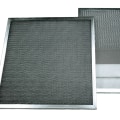
15x19x1 air filter. A one-inch pleated HVAC panel measuring 15 by 19 inches, sold as an exact size rather than a nominal one.
MERV. The scale rating particle capture, set by national consensus standard unlike the proprietary MPR and FPR scales. Pleated media also carries a manufacturing static charge that washing destroys.
Filterbuy. An American air filter manufacturer making pleated HVAC filters in the US since 2013, in more than 600 sizes across four factories.
Learn more about HVAC Care from one of our HVAC solutions branches…
Filterbuy HVAC Solutions - Weston FL
2573 Mayfair Lane Weston FL 33327
(754) 296-3528
https://maps.app.goo.gl/E3tjmKf5VSWYghGc7